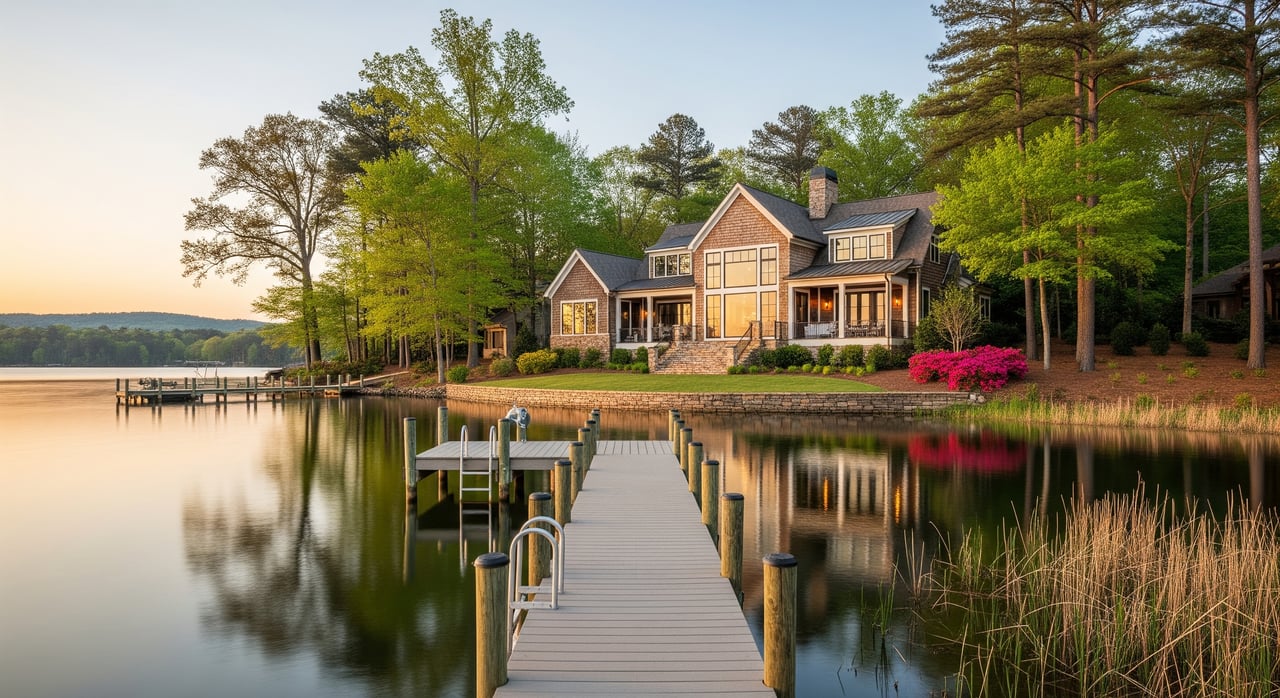
Looking at a lakefront home in Davidson and running into terms like year-round water, riparian rights, or no-wake zones? You are not alone. Lake Norman’s shoreline is beautiful, but it is also regulated, permitted, and full of vocabulary that can affect daily life and long-term value. Use this quick, plain-English guide to get clarity on what you are buying, who controls what, and how to verify key details before you make an offer. Let’s dive in.
Key lakefront terms
Main channel
The main channel is the lake’s primary navigable corridor where the water is deepest and larger boats travel. In practice, main-channel homes often have deeper water and bigger views, along with more wakes and passing traffic.
Cove
A cove is a smaller inlet off the main body of the lake. Coves are typically calmer and more private, but water can be shallower and may silt in over time.
Year-round water
This listing phrase suggests the dock remains navigable throughout seasonal lake level changes. It is not a legal guarantee on Lake Norman, which is a Duke Energy–managed reservoir with routine fluctuations. Ask for measured depths at the dock during normal pool and at typical low elevations, and whether the owner has ever lost access.
Pier, dock, boathouse, and slip
A pier or dock is a structure extending from shore for boat access and lounging. Docks can be floating or fixed; floating docks rise and fall with small level changes, while fixed docks are set on pilings. A boathouse is a roofed cover and often faces stricter rules. A slip is the defined parking space for a boat within a dock.
Pier permit types
Different configurations, sizes, lifts, and roofed structures often require different permits. On Lake Norman, Duke Energy’s shoreline management oversees lake structures, and other agencies may also be involved depending on the scope. Verify that any existing dock has a current, transferable permit and that the property carries the right to maintain it.
Rip-rap
Rip-rap is rock placed along the shoreline to reduce erosion. It usually requires permission and must be installed to specific standards so it does not harm neighbors or habitat.
View corridor and view easement
A view corridor is a protected sightline to the lake. It can be informal between neighbors or formal through a recorded easement or covenant. Formal protections can limit future obstructions, while a lack of them means views may change as properties evolve.
Riparian rights
These are rights tied to owning land along the water, including reasonable access and shoreline use. On a reservoir like Lake Norman, these rights are shaped by state law, lake authority rules, and any recorded covenants; they are not unlimited.
Ordinary High Water Mark (OHWM)
The OHWM is a reference line used to help define the boundary between private land and public or regulated waters. Many permits and approvals hinge on where this line lies, so it is important for surveys and shoreline projects.
Bulkhead or seawall
These are vertical retaining walls that stabilize the shoreline. They are regulated and sometimes discouraged in favor of more natural stabilization methods, depending on site conditions and rules.
No-wake zone
A no-wake zone is an area where boaters must travel slowly to avoid creating wakes. These zones protect safety and shorelines and can appear near bridges, marinas, or sensitive areas.
Who regulates what
Duke Energy
Duke Energy manages Lake Norman as a reservoir and runs the Shoreline Management Program that regulates docks, boathouses, rip-rap, and other shoreline structures. It also sets operating elevations and seasonal drawdown procedures that shape water levels. Always verify that any dock or boathouse has an active, transferable Duke permit or documented grandfathered status, and confirm the permit file.
U.S. Army Corps and North Carolina agencies
The U.S. Army Corps of Engineers may require federal permits for work that places fill or structures below the OHWM or affects wetlands or waters. North Carolina’s Department of Environmental Quality handles 401 water quality certifications and other state approvals for certain projects. Even if a project seems minor, confirm whether federal or state review applies.
Mecklenburg County and the Town of Davidson
County and town offices handle building permits, zoning, setbacks, land-disturbance, stormwater, and erosion-control rules. A Duke permit does not replace local approvals. Check both Mecklenburg County records and the Town of Davidson planning and zoning offices for any needed permits or restrictions, including tree and landscape ordinances that could affect shoreline work or views.
HOAs and recorded covenants
HOAs and recorded covenants can be more restrictive than public rules. They may limit dock size, boathouses, lifts, rip-rap, shared dock use, and even view protections. Request and review all HOA documents before committing to any improvements.
Verify before you offer
- Confirm Lake Norman oversight: Duke Energy manages the reservoir and shoreline structures.
- Ask for the dock permit: Obtain the Duke permit number, current status, and whether it is transferable; request the permit file.
- Check ownership rights: Determine if the dock is deeded, permitted on the parcel, or held by a separate license or easement that may not transfer.
- Validate water depth: Request recent depth readings at the dock at normal pool and typical low levels; ask how the seller defines “year-round water.”
- Review shoreline work: Ask for permits and installation details for rip-rap, bulkheads, or vegetation changes, including contractor information.
- Flood and insurance: Confirm FEMA flood zone, whether any structure is within the floodplain, and obtain insurance quotes as needed.
- Sewer or septic: Verify connection type and request septic inspection records if applicable.
- Easements and views: Order title work to locate easements, boat access rights, and any view easements or no-build areas.
- HOA and plat rules: Review covenants that govern docks, lifts, boathouses, guest parking, and shared facilities.
- Shared docks: Confirm maintenance responsibilities, cost sharing, and how slips are allocated and enforced.
- Environmental history: For older properties, check for remediation or special conditions related to past shoreline disturbance.
Common buyer questions
Do I inherit the seller’s dock permit?
Not automatically. Duke permits may be transferable when the new owner updates permit files, but the deed must also grant the right to have a dock. Always verify with permit documentation and a title search.
Will my HOA allow a boathouse?
Maybe. Even when public agencies would permit a boathouse, HOA covenants often restrict major structures. Do not assume approval until you review the rules.
Is rip-rap allowed on my shoreline?
Often, yes, but it is regulated. Many projects require prior approval and must meet sizing and placement standards, and some sites favor vegetative stabilization where feasible.
What does a main-channel view mean?
It usually means you can see the lake’s deeper, navigable corridor. Expect broader views and easier navigation for larger boats, along with more boat traffic and wakes.
Protect your view and access
Your lake view and boat access affect both lifestyle and resale value. If a view corridor matters, seek a recorded easement or covenant that preserves a defined line of sight. Without recorded protections, neighbors may build or plant in ways that change your outlook over time.
Ask your surveyor to locate the OHWM and show all easements and shoreline structures on a current survey. Have a real estate attorney review riparian rights language in your title work and advise on permit transfer steps. These small moves up front can prevent surprises later.
Next steps and local pros
- Request the dock and shoreline permit records from Duke Energy Shoreline Management.
- Order a current property survey that shows the OHWM, improvements, and easements.
- Hire a marine or dock professional to measure depth at the slip and assess dock condition and flotation.
- Engage a real estate attorney to review riparian rights, easements, and permit transferability.
- Consult Mecklenburg County and the Town of Davidson about building, zoning, erosion-control, and stormwater requirements.
- If you plan shoreline work, speak with contractors experienced with Duke Energy and state permitting on Lake Norman.
When you understand the vocabulary and the rules behind it, you can compare properties fairly, price risk into your offer, and protect your lifestyle on the water. If you want a confident, concierge path to the right lake home in Davidson, let’s talk. Connect with the team at Owning Lake Norman to schedule your private consultation.
FAQs
What does “year-round water” mean in Davidson listings?
- It is a marketing phrase that suggests navigable depth throughout seasonal changes; ask for recent depth measurements at normal pool and at typical low levels and confirm any Duke Energy lake level context.
Who approves dock changes on Lake Norman near Davidson?
- Duke Energy manages shoreline structures, and Mecklenburg County and the Town of Davidson may also require permits; some projects need state or federal review.
How do I confirm a dock permit will transfer to me?
- Request the Duke permit file and coordinate with your attorney and title company to confirm deeded rights and any steps needed to update the permit.
Are boathouses treated differently from open docks?
- Yes. Roofed structures like boathouses often face stricter rules and may require different approvals than open docks or lifts.
What is the OHWM and why should I care?
- The Ordinary High Water Mark helps define the boundary for private land versus regulated waters and is a key reference for permits and surveys.
Could my lake view change after closing?
- Yes. Unless there is a recorded view easement or covenant, neighboring construction or vegetation changes may alter your view over time.