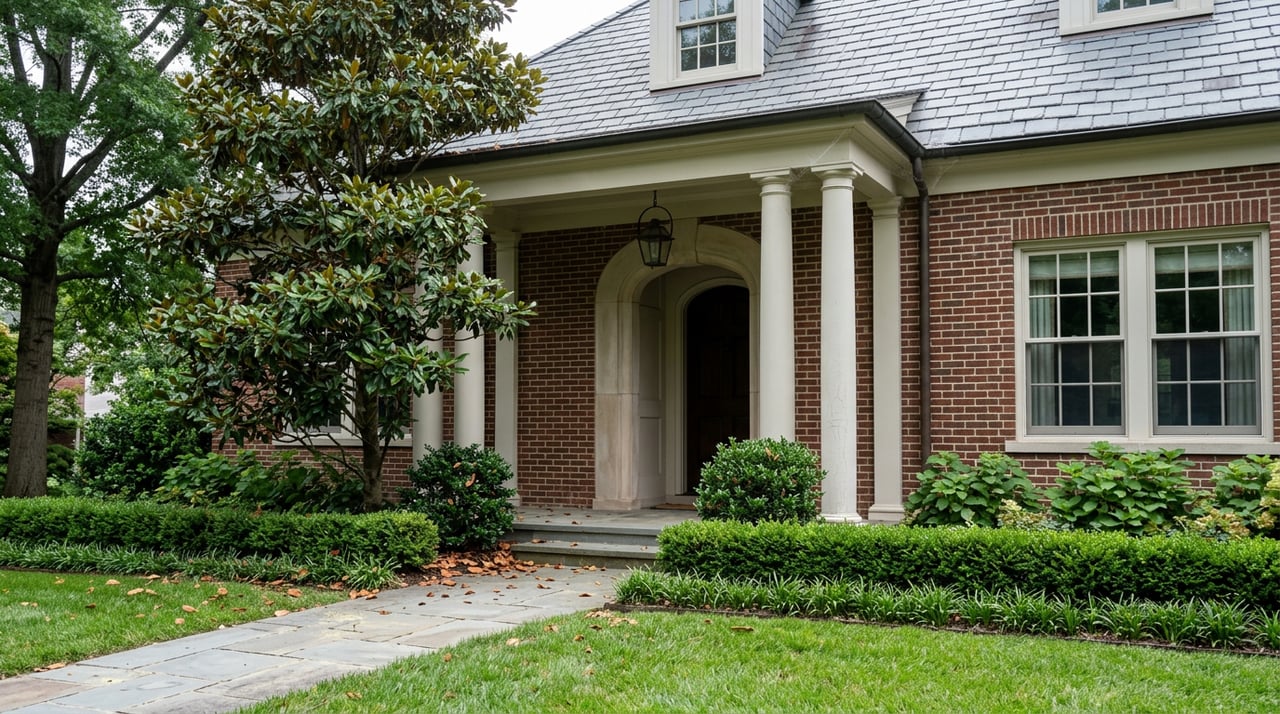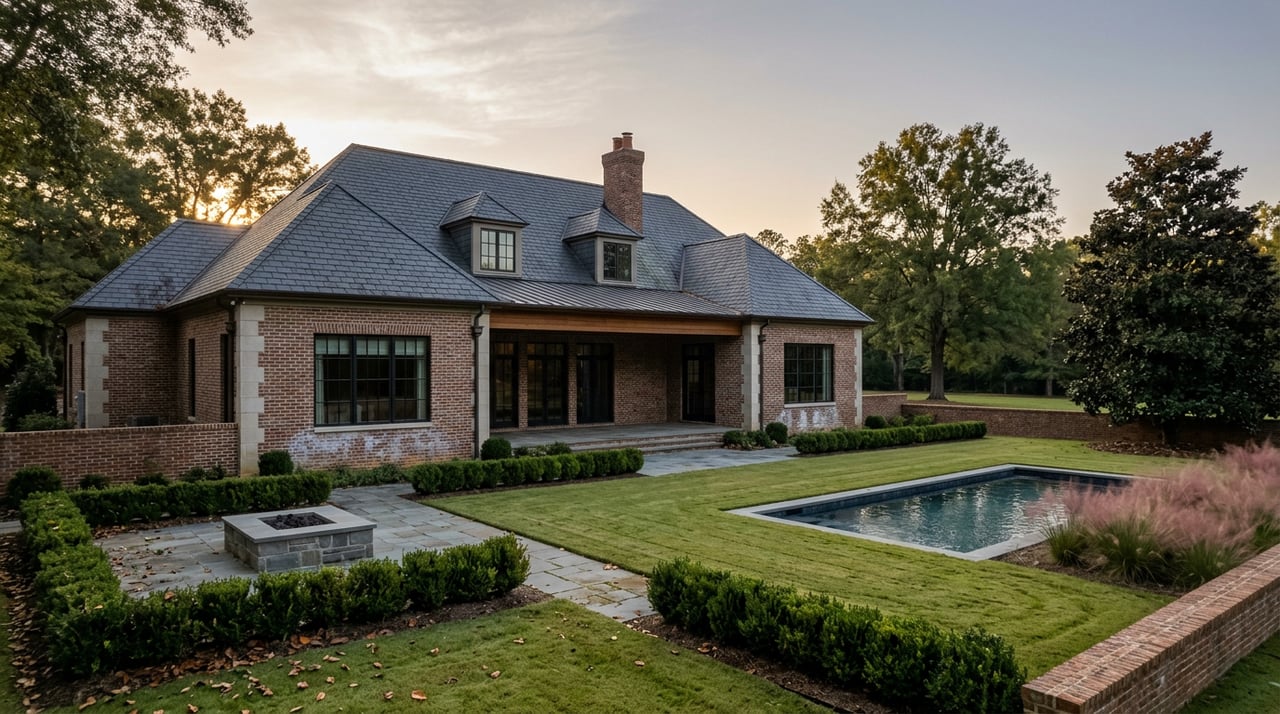
Scroll through active listings in Sherrills Ford this month and one phrase turns up more often than square footage or dock permits: no HOA. It's in the headline of a 1.19-acre waterfront home tucked into a quiet cove. It's in the description of a renovated three-acre homestead. It's the first thing mentioned on a wooded lot near Long Bay. For a buyer coming from a Charlotte subdivision with an architectural review committee and an annual assessment, that phrase reads like a promise. No board. No approval process. No one telling you what color to paint the trim.
That reading isn't wrong. It's just incomplete. Sherrills Ford is unincorporated Catawba County, which means most of it never had municipal sewer lines run to it and likely never will. The document that actually decides what you can build, how many bedrooms you can add, and whether your closing happens on schedule isn't a covenant filed with a homeowners association. It's a septic permit filed with Catawba County Environmental Health, and it governs the property in ways an HOA never could.
What No HOA Actually Replaces
In towns built around municipal water and sewer, a homeowners association often exists partly to manage what shared infrastructure can't handle on its own: drainage, setbacks, the general look of a street. Take the sewer line out of the equation and you remove one of the main reasons that kind of association tends to form in the first place. Sherrills Ford runs on private wells and septic systems as its default infrastructure, and North Carolina puts that infrastructure under a different kind of oversight entirely: a public health permit rather than a private contract between neighbors.
Catawba County requires a well to sit at least 50 feet from a septic tank, 100 feet from the drain field, and 100 feet from any animal waste area. Properties closer to Lake Norman face even tighter setback rules, since the county treats shoreline proximity as a water quality issue and regulates accordingly. None of that is negotiable the way an HOA variance sometimes is. A neighborhood board can vote to approve a taller fence. Catawba County Environmental Health does not vote on groundwater.
The soil adds another layer. Catawba County sits in the Piedmont foothills, where clay-heavy ground over weathered rock slows how quickly a drain field can absorb wastewater. Some lots need a larger field to compensate. Others need an engineered alternative, like a mound system, which raises both the installation cost and the physical footprint of the septic area on the property. The soil evaluation that determines all of this happens before a permit is ever issued, and it can quietly decide how close a future pool, garage, or addition is allowed to sit relative to the house.
A homeowners association covenant can be amended by a vote. A septic permit is amended by a percolation test.
The Permit That Actually Follows the House
Here's the part most buyers moving from a municipal-utility market don't expect. A septic system in Catawba County isn't approved for a house in the abstract. It's approved for a specific number of bedrooms. The Improvement Permit and Construction Authorization that get a system installed are sized to the load a given bedroom count would put on the drain field. Add a bedroom later, whether through a renovation, a finished basement, or an accessory structure, and you may be adding load the original permit was never designed to carry.
That matters most at resale. Catawba County requires an Operation Permit at property transfer, meaning the status of the septic system gets a formal checkpoint built into every single sale, independent of whether either party orders an inspection on their own. A buyer who assumes the absence of an HOA means the absence of oversight is missing the fact that this checkpoint fires automatically, every time the deed changes hands.
It's worth noting where Sherrills Ford does have restrictions, because the exception makes the pattern clearer. Gated communities like Harbour Watch, known locally for oversized lots and a private, controlled entrance, operate with their own deed restrictions layered on top of the septic requirements everyone in the county shares. That's the shape governance tends to take out here: restrictions show up inside specific developments built around a shared amenity, not as a townwide default the way they might in a newer planned community closer to Denver or Mooresville.
| Homeowners Association Covenant | Septic Operation Permit | |
|---|---|---|
| Governs | Paint colors, fence height, architectural style | Number of bedrooms the system is approved to serve |
| Enforced by | An elected board of neighbors | Catawba County Environmental Health |
| Reviewed | At the board's discretion | At every property transfer |
| Can be waived | Sometimes, by variance vote | No |
| Lives in | Recorded covenants | The county permit file, tied to the parcel |
What This Means at Closing
North Carolina doesn't have a single statute forcing every seller to order a septic inspection before closing. In practice, it happens anyway, because lenders functionally require it. Since a rule that took effect January 1, 2008, any inspection performed for a real estate transaction has to be done by someone certified through the North Carolina Onsite Wastewater Contractor and Inspector Certification Board. Not a plumber. Not a general home inspector. Not the company that last pumped the tank. Buyers can verify an inspector's certification directly through the board before scheduling.
Budget accordingly. A standard septic inspection in North Carolina typically runs $200 to $600, with the higher end reflecting whether the tank is pumped as part of the process. If the county's permit file shows an older system, or if clay-slowed absorption means the drain field needs work, full installation or replacement in Catawba County can run $3,500 to $15,000, with alternative or mound systems landing at the top of that range.
The well side of the transaction carries its own timeline. North Carolina's standard property disclosure form asks sellers to state whether the well has ever been tested for quality, quantity, or pressure, and when. For buyers financing through FHA, federal rules add setback requirements on top of the county's, calling for the well to sit at least 10 feet from the property line, 50 feet from the septic tank, and 100 feet from the drain field, along with a minimum yield of 3 to 5 gallons per minute. None of that gets confirmed overnight. In many North Carolina counties, buyers are advised to allow several weeks for lab turnaround and any required retesting, which means a due diligence period modeled on a municipal-utility closing can run short here.
Before You Write the Offer
If you're planning to add a bedroom, a guest suite, or an accessory structure, the county's permit file matters more than the listing photos. A lot permitted years ago for a three-bedroom system doesn't expand automatically because a new owner wants a fourth bedroom. Before assuming a renovation is possible, ask for the Improvement Permit and, if the system has changed hands before, the Operation Permit history tied to the parcel.
If you're selling, ordering the septic inspection early rather than waiting for a buyer to request it can head off a surprise late in the process, especially on older systems near the shoreline where clay soils and lake setbacks intersect.
Frequently Asked Questions
Is a septic inspection legally required to sell a home in North Carolina? No single state law mandates one for every sale, but a lender financing the purchase almost always requires it, and only inspectors certified through the state's Onsite Wastewater Contractor and Inspector Certification Board are authorized to perform it for a real estate transaction.
What is an Operation Permit, and why does it matter in Sherrills Ford? It's the document Catawba County issues confirming a septic system is installed and functioning as approved. Because it's required at every property transfer, it functions as an automatic checkpoint each time a Sherrills Ford home changes hands, regardless of whether either party independently requests an inspection.
How long should buyers budget for well water testing during due diligence? Plan for weeks rather than days. Lab turnaround and any required retests can stretch beyond a standard due diligence window, so scheduling the sample early matters more here than in a market served by municipal water.
Does "no HOA" mean a Sherrills Ford property has no restrictions at all? It means there's no private association enforcing architectural or lifestyle rules. It doesn't mean the property is unregulated. The septic permit on file with the county still determines what the system was built to support, and gated communities like Harbour Watch show that deed restrictions still exist within specific developments even where a townwide HOA doesn't.
Buying or selling on Lake Norman's quieter, less regulated shoreline comes with its own paperwork trail, and the details matter more here than the listing description suggests. Owning Lake Norman works these transactions from both sides of the closing table, coordinating everything from permit history checks to concierge-level project management. Schedule Your Private Consultation to talk through what a specific Sherrills Ford property is actually approved to do before you write an offer or sign a listing agreement.