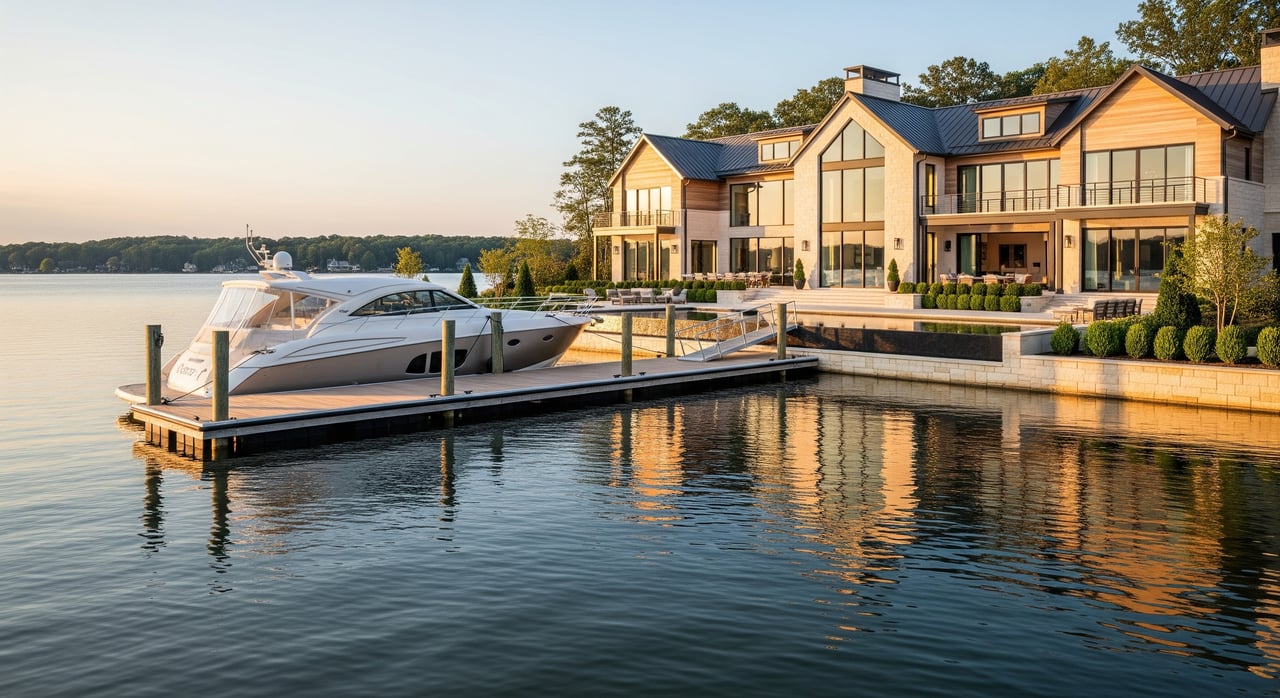
Eyeing a lakefront address in Cornelius and wondering how to finance it smartly? You are not alone. Many homes in The Peninsula and along Lake Norman list above the conforming loan threshold, which means jumbo financing is often part of the plan. In this guide, you will learn how jumbo loans work in Cornelius, where 2024 limits sit, what drives rates, and the steps to position your application for a smooth approval. Let’s dive in.
Jumbo loan basics in Cornelius
A jumbo loan is any mortgage that exceeds the annual conforming loan limit set by the Federal Housing Finance Agency. For 2024, the baseline one‑unit conforming limit is $766,550. Homes priced above that level often require jumbo financing unless you make a large enough down payment to reduce the loan size to conforming.
In Cornelius, luxury gated and waterfront neighborhoods like The Peninsula frequently list well beyond this threshold. That is why jumbo options are common for primary and second‑home buyers around Lake Norman.
2024 limits and why they matter
- 2024 baseline conforming limit for a one‑unit home: $766,550.
- High‑cost area one‑unit limit: $1,149,825.
Once you cross the conforming limit, your loan becomes ineligible for purchase by Fannie Mae or Freddie Mac and is priced as a jumbo by private lenders. There is no single jumbo rulebook. Each lender sets its own maximum loan amounts and underwriting tiers. Some portfolio or private banks will finance well above $1 million and tailor terms for strong borrowers. It pays to compare several options early.
Jumbo vs. conforming: what changes
Credit standards
- Strong credit is expected. For best pricing, lenders often look for FICO scores in the 720 to 760 range or higher.
- Underwriters review credit history closely, including utilization and recent inquiries.
Down payment and LTV
- Many jumbo programs expect at least 20 percent down, or an 80 percent loan‑to‑value ratio.
- For very large loans or more complex profiles, lenders may ask for 25 to 30 percent down or more.
Debt‑to‑income and reserves
- Many jumbo underwriters prefer DTIs below 36 to 43 percent. Strong compensating factors can allow flexibility.
- Reserve requirements are tighter. Plan for 6 to 12 months of principal, interest, taxes, and insurance. Second homes, investment properties, or very high loan amounts can require more.
Income and asset documentation
- Wage earners: recent paystubs, W‑2s, and tax returns.
- Self‑employed: two years of personal and business returns, profit and loss statements, and related schedules.
- Asset‑based qualifying: some lenders use asset depletion or income equivalents from liquid accounts. Requirements vary.
- Bank‑statement programs: available with select lenders for self‑employed borrowers, often with pricing tradeoffs.
Mortgage insurance and pricing
- Mortgage insurance is not standard for jumbos. Lenders rely on larger down payments, pricing, and reserve strength to manage risk.
Appraisal and property review
- Unique or waterfront properties often need a specialized appraisal and sometimes a second review.
- Condominiums can face stricter project requirements, including owner‑occupancy levels and reserve strength. Some projects may require a lender review.
Occupancy classification
- Primary residences typically allow higher LTV and lower rates. Second homes and investment properties usually carry tighter terms.
What drives jumbo rates today
The biggest driver is the overall interest rate environment. Lenders price jumbo loans using market benchmarks and liquidity conditions, then add a spread that reflects credit risk and funding costs. Your individual rate will hinge on:
- Credit score. Higher scores qualify for better pricing.
- Loan‑to‑value. A larger down payment can reduce your rate.
- Loan amount. Very large balances may fall into different pricing tiers.
- Occupancy. Primary residence pricing is typically lower than second home or investment.
- Product type. Fixed versus ARM, and whether interest‑only is available and appropriate.
- Documentation. Full documentation usually prices better than alternatives.
- Points and fees. You can pay points to lower the rate.
In some cycles, jumbo rates run higher than conforming. In recent years, spreads have narrowed at times. Because conditions shift quickly, refresh quotes close to when you plan to write an offer.
Smart shopping strategy in Cornelius
- Start early with lenders who know Lake Norman. Ask about experience with waterfront and luxury appraisals and HOA reviews.
- Get a full jumbo pre‑approval, not a verbal pre‑qual. Verified assets, income, and reserves strengthen your offer.
- Compare lender types:
- Local or regional banks that know Mecklenburg County nuances.
- Mortgage brokers who can shop multiple wholesale investors.
- Portfolio or private banks for flexible structures and very large loans.
- Discuss rate locks and float‑down options. Volatile markets reward clear lock strategies.
- Decide fixed versus ARM based on your hold horizon. If you expect to sell or refinance in a shorter window, an ARM may lower payments in the near term.
Documents to prepare
Bring a complete and clean file to keep underwriting smooth. Expect some or all of the following:
- Government ID and Social Security number.
- Two years of federal tax returns, personal and business where applicable.
- Two years of W‑2s and recent paystubs for employed borrowers.
- Two years of business returns and current profit and loss statements for self‑employed.
- Twelve to twenty‑four months of personal and business bank statements if requested.
- Brokerage and retirement account statements, often two to three months, sometimes longer for large transfers.
- Paper trails for large deposits or transfers to season funds.
- Proof of reserves that meet lender criteria.
- HOA or condo documents, including CC&Rs and budgets. Lenders often require a condo questionnaire or project review.
- Homeowner and any required flood insurance quotes or binder.
- Appraisal ordered by the lender. High‑value or unique properties may trigger an additional review.
Pro tip: avoid introducing large, unexplained deposits during the review. Season major funds in advance, and keep transfers documented and simple.
Second‑home and waterfront considerations
- Occupancy classification. Be clear about whether the home is a primary residence or second home. This impacts LTV, reserves, and pricing.
- Potential rental use. If you plan to rent part‑time, disclose early. It can change underwriting.
- Flood exposure. Obtain a flood determination early, especially on lakeshore lots. Even if the property is not in a mapped floodplain, lenders or insurers may request additional verification.
- HOA health. Many Cornelius luxury communities have active HOAs. Lenders review budgets, reserves, and special assessment history.
- Appraisal comps. Lakefront homes are unique. Expect appraisers to search across Lake Norman neighborhoods for the best comparables, not just within a single subdivision.
What to expect from contract to closing
- Appraisal timing. Luxury and waterfront appraisals can take longer. Build room in your contract timelines.
- HOA and condo reviews. Allow time for project questionnaires, budgets, and meeting minutes if applicable.
- Insurance verification. Secure homeowner and flood quotes early so there are no surprises.
- Reserve verification. Be ready to show required months of PITI in liquid or acceptable assets.
- Final underwriting pass. Respond quickly to conditions so your clear‑to‑close stays on track.
Most jumbo closings land in the 30 to 60 day range. Complex properties or income structures can extend that timeline.
Strategy playbook for Lake Norman buyers
- Keep it conforming if close to the line. If your target price is just above the conforming limit, consider increasing your down payment to keep the loan conforming. It can simplify underwriting.
- Use assets wisely. If you are asset‑rich and income‑light, ask about asset depletion programs or portfolio bank options that align with your balance sheet.
- Consider private banking. For very large loans or bespoke terms, a private bank that keeps loans on its books may offer tailored solutions.
- Mind the reserves. Plan early for 6 to 12 months of PITI, or more for second homes and high balances.
- Rate risk management. Decide when to lock based on your risk tolerance and market view. Ask about float‑down options.
- Strong pre‑approval. Present sellers with a full jumbo pre‑approval that verifies income, assets, and reserves. It signals certainty.
The bottom line
In Cornelius and around Lake Norman, jumbo financing is a normal part of buying luxury and waterfront property. Your best outcomes come from early planning, complete documentation, and working with lenders who understand the nuances of second homes, HOAs, flood considerations, and lakefront appraisals. With the right strategy, you can secure competitive terms and close on the property that fits your lifestyle.
Ready to explore your options and position your offer to win? Schedule your private, confidential consult with the local team that lives luxury on Lake Norman. Connect with Owning Lake Norman to Schedule Your Private Consultation.
FAQs
What makes a loan “jumbo” in Cornelius?
- Any mortgage amount above the FHFA’s conforming loan limit for the year, which for 2024 is $766,550 for a one‑unit home in most areas.
How much down payment do I need for a jumbo?
- Many lenders expect at least 20 percent down, with 25 to 30 percent common at higher prices or for more complex profiles.
Do jumbo loans have higher rates than conforming?
- Sometimes, although recent market cycles have seen narrower spreads. Your rate depends on credit, LTV, loan size, occupancy, documentation, and market conditions.
Can I qualify using assets instead of income?
- Often yes. Asset depletion or similar methods can convert liquid assets to an income equivalent, subject to each lender’s rules.
Will a condo in a luxury community be harder to finance?
- It can be. Many lenders require condo project reviews that look at reserves, owner‑occupancy, and any litigation or special assessments.
Are there special insurance issues for lakefront homes?
- Flood exposure and waterfront considerations can affect both lender requirements and coverage. Obtain quotes and determinations early in the process.
How long does a jumbo closing take?
- Plan for 30 to 60 days, and allow extra time for specialized appraisals, HOA reviews, and documentation for complex income or assets.